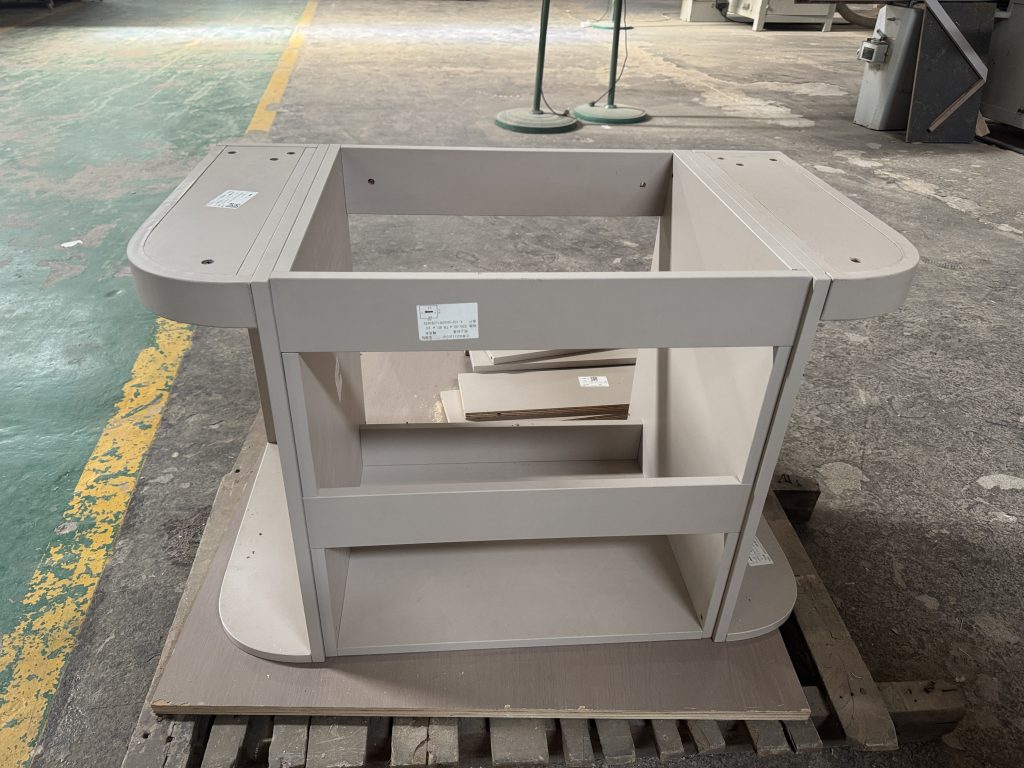
A bathroom vanity sample is an important step between product selection and mass production. It gives buyers an opportunity to confirm whether the design, dimensions, materials and functional details meet the requirements of their market or project.
Approving a sample based only on appearance can create problems later. A structured review helps reduce misunderstandings and provides a clearer production standard for both the buyer and the supplier.
1. Confirm the Overall Dimensions
The first step is to check the vanity width, depth and height against the approved drawing or specification sheet.
Buyers should also verify:
- Cabinet dimensions
- Drawer and door sizes
- Basin position
- Tap-hole configuration
- Plumbing space
- Wall-mounting points
- Clearance around drawers and doors
These details are especially important when the vanity must fit an existing bathroom layout or coordinate with other products.
2. Check the Cabinet Material and Construction
The sample should use the agreed cabinet material, such as plywood, MDF, particle board, PVC or metal.
The inspection should confirm the material thickness, edge treatment and internal construction. For wall-mounted vanities, the fixing structure also needs to be strong enough for the cabinet, basin and expected daily use.
If different materials are used for the cabinet body, doors or drawer panels, they should be clearly identified before production begins.
3. Review the Colour and Surface Finish
Colours can appear different under showroom lighting, factory lighting and natural daylight. Buyers should therefore evaluate the sample under more than one lighting condition when possible.
For painted, laminated or wood-grain finishes, check:
- Colour consistency
- Surface texture
- Gloss level
- Edge finishing
- Visible scratches or marks
- Matching between different panels
A physical colour sample or signed reference panel can be retained as the production standard.
4. Test Doors, Drawers and Hardware
Doors and drawers should open smoothly without rubbing against adjacent panels. Gaps between components should appear balanced, and handles or finger-pull details should be comfortable to use.
The hinges, drawer slides and other hardware should match the approved specification. Soft-closing performance should also be tested several times rather than checked only once.
For wide vanities, the drawer structure must be designed carefully to maintain practical proportions and sufficient support.
5. Confirm Basin and Countertop Compatibility
The basin, countertop and cabinet must work together as one complete unit.
Important checks include:
- Basin dimensions and position
- Countertop overhang
- Drain-hole alignment
- Tap-hole position
- Silicone or installation gaps
- Plumbing access inside the cabinet
If the basin and cabinet come from different production sources, sample assembly is especially useful for identifying compatibility issues before shipment.
6. Review Functional Details
The sample should be evaluated as a product that will be installed and used, not simply photographed.
Check whether the drawers provide practical storage, whether plumbing cut-outs are correctly positioned and whether frequently used surfaces are easy to clean.
For project orders, it is also useful to confirm that the installation method can be repeated consistently across multiple rooms.
7. Approve the Packaging Method
Packaging should be reviewed before mass production, particularly for export orders.
Depending on the product and shipping conditions, protection may include:
- Corner protectors
- Foam or honeycomb board
- Protective film
- Reinforced cartons
- Separate protection for basins or countertops
- Clear product and carton identification
The packaging should protect vulnerable areas without adding unnecessary volume to the shipment.
Create a Clear Approval Record
After the sample review, confirmed details should be recorded through signed drawings, photographs, colour references or an approval checklist.
Any requested changes should be completed and confirmed before mass production begins. This creates a shared reference for production and final quality inspection.
At OSANIO, we help buyers coordinate bathroom vanity selection, sample confirmation, product matching, quality control, protective packing and mixed-order planning.
If you are preparing a bathroom vanity collection or a project bathroom package, contact us to discuss your product list and sample requirements.